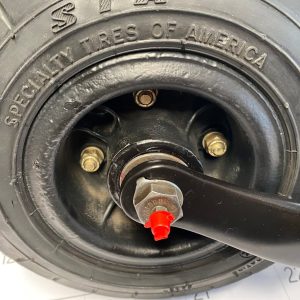
The Scott 3200A Tailwheel – Fully Rebuilt may suit classic airplanes, utility aircraft, bush planes, experimental designs, and other compatible general aviation platforms. The quality of the rebuild depends on workmanship, parts selection, dimensional condition, technical procedures, final adjustment, and available documentation.
A Scott 3200A Tailwheel Assembly can contribute to controlled taxiing, parking, takeoff alignment, landing rollout, and maneuvering in confined ramp areas. A Scott Tailwheel Assembly should be evaluated as a complete mechanical system rather than judged only by its tire, fork, paint, or visible exterior hardware.
An Aircraft Tailwheel Assembly experiences vertical loads, side forces, vibration, steering input, and occasional impact during routine service. The General Aviation Tailwheel should receive maintenance based on actual use, operating surface, contamination exposure, and observed condition.
Whether the project involves a Tailwheel Steering Assembly, Aircraft Ground Handling Tailwheel, or Scott 3200 Series Tailwheel, professional installation remains important.
Exploring the Scott 3200 Tailwheel Design
The Scott 3200A is designed to provide tail support, wheel rotation, steering response, and controlled swiveling for compatible conventional-gear aircraft. The tailwheel operates together with the aircraft tail spring, steering chains or links, steering springs, rudder system, attachment bolts, and surrounding structure.
Scott 3200A Tailwheel Assembly Features
Suitable internal clearances and secure steering components contribute to consistent performance. Reusable parts may remain acceptable when they pass inspection, while worn or damaged components should be replaced appropriately.
Scott Tailwheel Assembly Rebuild Process
Worn components should be replaced while retained items should meet suitable inspection criteria. A written work summary helps explain how the seller defines the assembly’s condition.
Aircraft Tailwheel Assembly Maintenance
Correct mechanical condition supports predictable aircraft behavior on the ground. Weak, broken, or mismatched Aircraft Ground Handling Tailwheel steering springs may reduce directional response or create irregular control.
General Aviation Tailwheel Applications
A General Aviation Tailwheel may operate from paved airports, grass runways, gravel strips, private fields, dirt airstrips, and backcountry locations. Professional verification helps prevent unsuitable installation and unnecessary project expense.
Benefits of an Aircraft Tailwheel
Its geometry, tire condition, fork alignment, steering arrangement, and internal condition can influence ground behavior. A serviceable tire-and-wheel arrangement supports the work completed within the steering mechanism.
Choosing a Taildragger Tailwheel
Taildragger pilots coordinate rudder, brakes, power, and tailwheel input to maintain ground stability. Pilots should avoid unnecessary mechanical stress while using operating techniques appropriate to the aircraft and surface.
Benefits of an Aviation Tailwheel System
Every component influences how steering input reaches the wheel and how operational loads return to the aircraft. Left and right steering connections should be inspected for matching condition and correct installation.
Tailwheel Steering Assembly Performance
The mechanism should respond smoothly without sticking, harsh engagement, excessive delay, uncontrolled release, or irregular centering. The full steering and swivel range should be checked after installation.
Maintaining Aircraft Ground Handling Components
Poor steering response can increase tire wear, brake use, pilot workload, and difficulty in confined spaces. The tailwheel should not be used as an unsuitable lifting, pulling, or jacking point.
Scott 3200 Tailwheel Applications
The Scott 3200 Series Tailwheel has become familiar within general aviation through its use on numerous conventional-gear aircraft and restoration projects. Buyers should verify markings, mounting dimensions, steering-arm arrangement, wheel configuration, and included components.
Heavy-Duty Aircraft Tailwheel Applications
The tailwheel should match the aircraft’s suitable configuration, tail load, geometry, and operating environment rather than being selected from appearance alone. Durability depends on structural condition, bearing service, steering-spring integrity, wheel alignment, lubrication, tire condition, and correct installation.
Maintaining Tailwheel Components
Correct Tailwheel Aircraft Parts protect the integrity and performance of the rebuilt assembly. Replacing only the most obvious damaged component may not correct the underlying issue.
Aircraft Tailwheel Directional Control
The assembly should respond without excessive delay, harsh engagement, binding, or uncontrolled movement. Ground loops, abrupt turns, crosswind corrections, rough surfaces, and towing events can place side loads on the steering system.
Buying a Replacement Aircraft Tailwheel
The rebuilt Scott 3200A should be compared with both the existing installation and the intended aircraft configuration. The replacement should be inspected after delivery for shipping damage, missing components, rough bearings, incorrect hardware, cracks, or visible defects.
Choosing General Aviation Landing Gear Parts
General Aviation Landing Gear Parts include tailwheels, nose gear components, main gear assemblies, wheels, tires, brakes, bearings, springs, steering parts, and mounting hardware. Used or rebuilt landing gear parts should be listed with accurate identification, condition, rebuild history, package contents, and available documentation.
Scott Tailwheel Condition Checklist
The buyer should request enough information for a qualified maintenance professional to review the assembly before purchase.
- Resolve identification, compatibility, and completeness questions before payment.
- Review the rebuild summary for disassembly, cleaning, inspection, bearing replacement, bushing work, spring service, lubrication, hardware renewal, adjustment, and testing.
- Require packaging that protects the wheel, fork, steering arms, mounting surfaces, fittings, and loose hardware from impact and movement.
Professional Scott 3200A Installation
Mounting surfaces, steering springs, chains, hardware, and attachments should be reviewed before the rebuilt unit is installed. The steering linkage should respond properly without restricting rudder movement.
A post-installation inspection can confirm hardware security and reveal early movement marks.
Routine Tailwheel Inspection and Service
Consistent servicing protects the value of the Scott 3200A Tailwheel – Fully Rebuilt. Pilots should inspect the tailwheel before operation for tire damage, loose hardware, bent parts, steering-link condition, contamination, corrosion, and visible misalignment.
Hardware and moving areas should remain visible enough for inspection.
Choosing the Scott 3200A Tailwheel – Fully Rebuilt
When professionally inspected, installed, adjusted, tested, and maintained, the Scott 3200A Tailwheel – Fully Rebuilt can become a reliable component of a compatible conventional-gear aircraft. The strongest purchase decision begins with confirming model identity, rebuild scope, replaced components, retained parts, structural condition, tire status, steering arrangement, included hardware, and aircraft compatibility.
Whether operators are sourcing an Aircraft Steering Tailwheel, Replacement Aircraft Tailwheel, or General Aviation Landing Gear Parts, complete condition information supports informed decisions. With responsible operation, protected shipping, timely maintenance, and organized documentation, the rebuilt tailwheel can remain a valuable aviation component.